Choosing the best raw material for a paper cup machine is not just a matter of buying thicker paper. The board must feed smoothly, hold its shape, and seal reliably around the cup’s side seam and base. A sheet that feels sturdy in your hand may still curl, crack, or jam during production. Small differences matter.
This guide explores how paperboard weight, stiffness, moisture, and coating affect cup quality and machine performance. It also considers common coating options, including polyethylene, PLA, and water-based barriers, while recognizing that suitability depends on the cup’s intended use and verified supplier specifications. How to select the right raw materials for paper cup machines starts with matching the board to the machine, cup size, forming conditions, and required barrier performance. Ask suppliers for technical data and food-contact documentation, then test samples on your own production line. A short trial can reveal weak seals, rough rims, or excessive waste that a brochure will not show.
There is no universal “best” material. Lower-cost stock may look attractive until stoppages and rejected cups add up. Yet premium board is not automatically better, either. That judgment can be easy to get wrong. This article offers practical criteria for comparing materials, spotting trade-offs, and making a choice based on measurable results rather than a confident sales claim.
What Cupstock Means: Food-Grade Board Typically Ranges from 170–350 g/m²
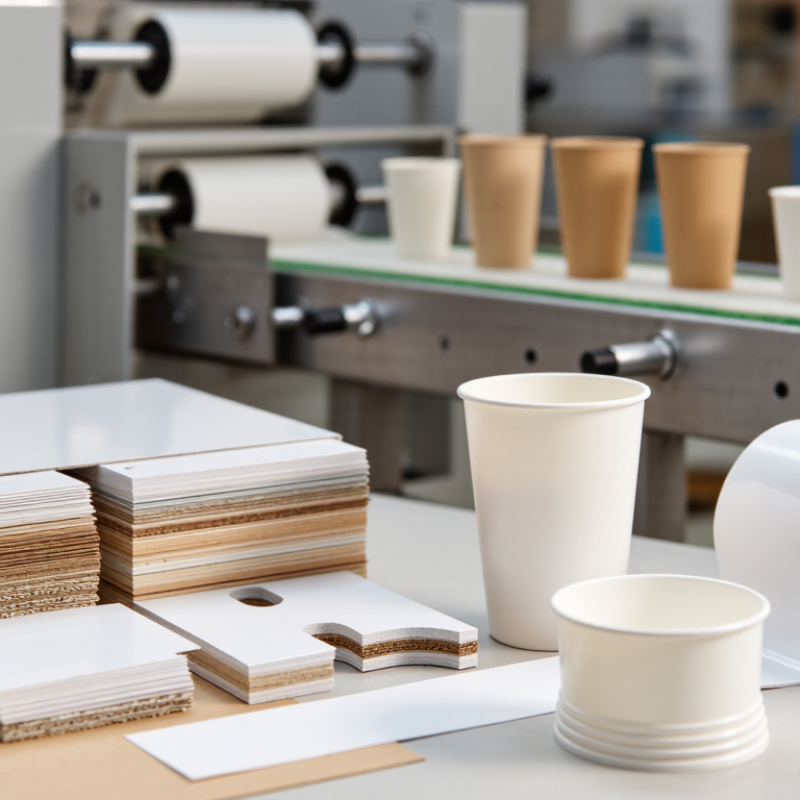
Cupstock is paperboard made for forming disposable cups, and its grammage commonly falls between 170 and 350 g/m². That range covers very different jobs. A small cold-drink cup may use lighter board, while a larger or hot-drink cup often needs more stiffness. Grammage alone does not tell the whole story. Fiber quality, board thickness, moisture, and coating all affect how a sheet feeds and forms.
On a paper cup machine, board that is too light may wrinkle or lose shape during forming. Heavy board can be harder to crease and seal, especially if the machine settings are not adjusted. Feel the sheet, but do not rely on feel alone. Check how it bends at the intended crease, and test whether the side seam seals evenly. A slight curl can also disrupt feeding. It happens.
Because cups contact food and beverages, ask for documentation confirming that the cupstock is suitable for its intended use. The inner barrier may be a polymer coating or another approved material, depending on the application. A thicker coating does not automatically make the best cup. It can change heat transfer, sealing behavior, and recyclability. Run a small production trial with the actual cup size, forming speed, and sealing settings before ordering a large quantity. One detail is easy to miss: storage humidity can alter board performance, even when the grammage stays the same.
How Virgin and Recycled Pulp Affect Strength, Odor, and Food-Contact Safety
For paper cup machines, virgin pulp usually gives more consistent strength. Its longer fibers form a stronger network, helping a cup hold hot coffee without softening quickly at the seam. Recycled pulp can work well, but repeated processing shortens fibers and may increase variation between batches. Operators may need to adjust refining, moisture, or forming pressure. Small changes matter. A thin spot near the base can become a leak.
Odor and food-contact safety depend on pulp quality and process control, not simply on whether fiber is virgin or recycled. Residual inks or other substances in recycled feedstock can create unwanted smells or require closer screening. The US EPA’s 2018 materials report recorded a 68.2% recycling rate for paper and paperboard, showing how widely recovered fiber circulates, but that figure does not certify any pulp for cups. Each batch still needs appropriate screening and food-contact evaluation, including checks for odor and substance migration. The label alone is not enough. In production, a warm cup may smell faintly of wet cardboard before filling; that signal deserves investigation, not a quick dismissal. One practical trade-off remains: recycled pulp can conserve recovered material, while virgin pulp often offers steadier forming performance.
What Is the Best Raw Material for Paper Cup Machines?
Typical fiber-length ranges in papermaking furnishes (mm)
Fiber length varies with wood species, recovered-paper mix, and processing; the recycled-pulp range shown is indicative, not a universal specification. Longer fibers can contribute to strength, but cup performance also depends on furnish, forming, and coating. Odor and food-contact safety cannot be judged from virgin or recycled content alone: assess odor, contamination controls, and compliance of the finished cup with applicable food-contact requirements.
How PE Coatings, Often 12–20 g/m² per Side, Help Prevent Leakage
For paper cup production, the best raw material is usually cupstock paperboard with a suitable moisture barrier. The board needs enough stiffness to hold its shape, yet it must bend cleanly around the cup wall. Fiber quality and board thickness matter, but the coating matters just as much when the cup holds liquid.
Polyethylene, or PE, is widely used because it creates a continuous barrier and helps the paperboard resist soaking. Coating weights often range from 12–20 g/m² per side, though this is a reference range, not a guarantee of leak resistance. The right weight depends on the board, forming conditions, liquid temperature, and how long the drink stays in the cup. A thin or uneven layer can leave weak spots. Small pinholes matter.
Coating quality also affects heat sealing at the side seam and bottom. During production checks, manufacturers can inspect seal strength and test filled cups for seepage, including around the base. More PE is not automatically better; excess coating may affect forming or sealing, while adding material without fixing uneven coverage solves little.
There is a trade-off. The specified coating weight should be confirmed against the cup design and actual machine settings, since a number on a material sheet cannot reveal every production issue.
Which Board Properties Matter to Cup Forming: Caliper, Stiffness, and Moisture
What Is the Best Raw Material for Paper Cup Machines?
Which Board Properties Matter to Cup Forming: Caliper, Stiffness, and Moisture
The best cupstock is not simply the thickest board. It must feed evenly, wrap around the forming tool, and hold its shape after sealing. Caliper affects wall thickness and how reliably blanks stack and feed. Uneven caliper can cause small but costly changes in cup dimensions. Stiffness helps the formed wall stay upright, yet overly rigid board may resist curling. There is no single ideal setting for every cup size or machine.
Moisture matters just as much. Board that is too damp may curl, feed poorly, or weaken the side seam. Board that is too dry can feel brittle and crack during forming. Room conditions, storage, and time out of packaging can all change the sheet’s behavior. That part is easy to overlook. A board sample may run well in one workshop and poorly in another.
Tips: Check caliper across several points, not just one edge. Compare stiffness in both sheet directions, since grain orientation can affect curling. Let samples adjust to the production room before testing, and record forming results alongside moisture readings. If cups split or seams vary, pause before changing machine settings; the board may be contributing. Small test runs help, though they do not catch every production issue.
What Is the Best Raw Material for Paper Cup Machines? — Which Board Properties Matter to Cup Forming: Caliper, Stiffness, and Moisture
| Board property |
Indicative range or check |
Why it matters to cup forming |
What to watch for |
| Caliper (thickness) |
About 250–400 µm for many cupstock applications; confirm the target for the cup size and machine. |
Influences wall rigidity, rim formation, side-seam overlap, and how the blank feeds through forming tools. |
Board that is too thin may produce a flexible cup wall. Excessive thickness can make folding and seam formation more difficult. |
| Stiffness |
Specify and test in both machine direction (MD) and cross direction (CD). There is no single universal value for every cup size or machine. |
Helps the sidewall hold its shape during forming and supports a stable, round cup after the blank is wrapped. |
Insufficient stiffness can lead to wall distortion. Excessive stiffness may increase cracking or spring-back at folds and seams. |
| Moisture content |
A practical incoming-material target is often around 6–8% by mass; use the board supplier’s specification and test method. |
Moisture affects board flexibility, dimensional stability, and the consistency of folding and sealing. |
Overly dry board can become brittle; overly moist board may soften, curl, or change dimensions. Keep stock protected from humidity changes. |
| Basis weight |
Common cupstock grades are broadly available around 180–350 g/m², depending on cup size and construction. |
Contributes to cup strength and is considered alongside caliper and stiffness when selecting a grade. |
Do not use basis weight alone to predict forming performance; two boards with the same basis weight can differ in thickness and stiffness. |
| Coating and sealing layer |
Confirm that the coating type, coverage, and heat-seal performance are suitable for the machine’s sealing process and intended use. |
A compatible sealing layer helps the side seam and bottom seal form reliably. |
Check seal performance under the actual line settings. Coating suitability does not by itself establish food-contact compliance. |
| Grain direction and sheet consistency |
Check grain direction, caliper variation, curl, and cutting orientation against the blank layout and machine setup. |
Consistent direction and flatness support predictable feeding, folding, and side-seam alignment. |
Uneven sheets or inconsistent orientation can cause feeding variation, misalignment, and irregular cup shape. |
Selection note: These ranges are general starting points, not universal machine specifications. The best cupstock is the grade that meets the cup design, sealing method, and equipment requirements in production trials. Verify properties using the supplier’s stated test methods.
How to Check Materials Against FDA 21 CFR 176.170 and EU Regulation 1935/2004
For paper cup machines, the strongest starting point is food-contact-grade cupstock, not simply the stiffest board. Choose paperboard with documented composition, suitable coatings, and performance matched to the drink’s temperature and fat content. FDA 21 CFR 176.170 covers paper and paperboard components contacting aqueous and fatty foods; check that the material’s intended use and extraction conditions fit the cup application. A supplier declaration is useful, but it is not a substitute for reviewing the underlying test data.
The EU framework sets a different kind of check. Regulation (EC) No 1935/2004 requires materials not to transfer constituents in amounts that endanger health or unacceptably change food; Article 17 also requires traceability. Ask for batch identification, coating details, and migration or extractives results relevant to the intended use. Paper is not fully harmonized through one EU-specific measure, so document the applicable national requirements too.
Documentation matters. FAO’s 2023 Yearbook of Forest Products reports roughly 401 million tonnes of paper and paperboard production in 2022, a reminder of the scale and variety behind “paper.” That figure says nothing about food-contact safety. I would still check cup samples after forming: seams, rims, and hot-liquid exposure can reveal problems that a flat sheet misses.
One detail is easy to overlook. A compliant base sheet does not automatically make every finished cup compliant.
Conclusion
Choosing the best raw material for paper cup machines starts with understanding cupstock: food-grade paperboard commonly ranges from 170 to 350 g/m², with the suitable grade depending on the cup’s size and intended use. Virgin and recycled pulp can differ in strength, odor, and suitability for food contact, so material selection should consider both forming performance and the requirements for the finished cup. A polyethylene coating, often applied at about 12–20 g/m² per side, helps create a barrier against leakage.
How to select the right raw materials for paper cup machines also involves checking caliper, stiffness, and moisture content. These properties affect how reliably the board feeds, forms, and seals during production. Before use, confirm that the paperboard and coatings are supported by appropriate food-contact documentation and assessed against relevant requirements, including FDA 21 CFR 176.170 and EU Regulation 1935/2004. Together, these checks help manufacturers balance machine performance, cup durability, and food-contact suitability.

 Jinli Machinery