In recent years, the demand for sustainable packaging solutions has surged, particularly in the beverage industry. With an annual growth rate of around 8.4% projected for the paper cup market, it is essential for small businesses to consider investing in the right equipment. How to choose a paper cup machine for small business is a critical question facing many entrepreneurs today.
Investing in a paper cup machine can significantly impact profitability. However, the market is flooded with various options, making selection challenging. Some machines produce up to 60 cups per minute, while others may offer lower output. Choosing high-quality machinery can enhance product consistency and reduce waste.
Despite these advancements, small business owners often overlook essential factors. Technical support, repair costs, and machine adaptability to different cup sizes are crucial considerations. The wrong choice can lead to operational inefficiencies and increased expenses. Therefore, understanding the specific needs of your business is vital for making an informed decision.
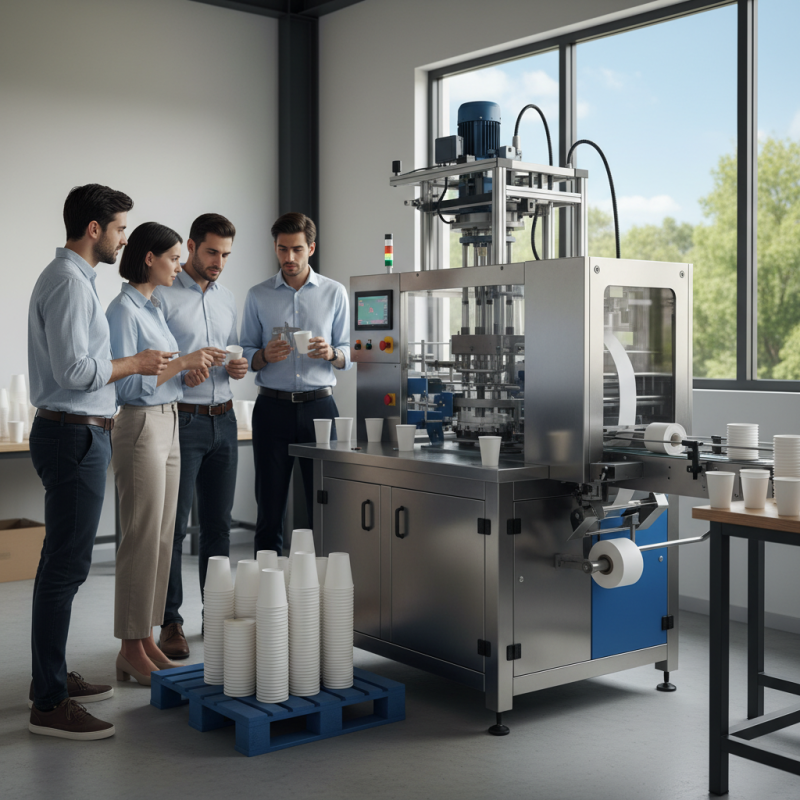
When selecting a paper cup machine, it's vital to understand the different types available. Each type serves unique functions and meets various production needs. For instance, there are single-layer and double-layer cup machines.
Single-layer machines are cost-effective, suitable for simple cups. In contrast, double-layer machines offer better insulation, ideal for hot beverages.
Another classification is manual versus fully automatic machines. Manual machines require more human involvement, leading to lower production rates. They are suitable for small businesses starting their journey. Fully automatic machines, however, have high efficiency and can produce a large volume of cups swiftly. This can be a challenge for some small businesses to invest in from the outset.
Lastly, consider machines that produce different cup sizes. Some models only create standard sizes, while others can be adjusted for various dimensions. This flexibility might be crucial as your business grows. Reflecting on your specific needs and potential market trends will guide your choice effectively. Don't forget to evaluate your budget, as various options are available across different price ranges.
Choosing a paper cup machine for your small business can be daunting. Start by identifying your business needs. Consider your production volume. How many cups do you plan to produce daily? Understanding this will guide your machine selection. Machines vary in speed and output. Some can produce thousands of cups per hour, while others are better suited for lower volumes.
Next, think about your product types. Are you making hot cups or cold cups? Different machines cater to different materials and sizes. You may also need to determine if you want printed cups or plain ones. This affects machine capabilities and production costs. Reflect on your budget too. High-end machines may offer advanced features, but they often come with higher maintenance costs.
Finally, evaluate space requirements. Paper cup machines can be large. Ensure you have enough area for installation and operation. This also includes space for raw materials and finished products. Assessing these factors will help fine-tune your decision. Choosing the right machine is vital for your business’s success. Mistakes can lead to wasted resources or unmet production goals.
Choosing the right paper cup machine for your small business involves careful consideration of speed, size, and capacity. Speed is crucial. A faster machine can produce more cups, meeting high demand efficiently. However, it's important to balance speed with quality. Rapid production may lead to defects, frustrating customers.
Size also matters. A compact machine fits into limited workspaces, ideal for small businesses. Larger machines might increase output but require more space and maintenance. Assess your available area and future growth plans. Plan for potential expansion, even if it seems improbable now.
Capacity is another key factor. Analyze your expected daily output. A machine with a higher capacity may seem advantageous, but overestimating needs might lead to unnecessary costs. Evaluate your current market and adjust accordingly.
Tips: Look for machines that offer flexibility in cup sizes. This can increase your market reach. Additionally, investing in a machine with easy maintenance features will save time and costs in the long run. Finally, seek guidance from experienced users. Their insights can unveil details you might overlook.
| Feature | Description | Small Size Machine | Medium Size Machine | Large Size Machine |
|---|---|---|---|---|
| Speed | Number of cups produced per hour | 30-40 cups/hour | 60-80 cups/hour | 120-150 cups/hour |
| Size | Overall dimensions of the machine | 2m x 1m x 1.5m | 3m x 1.5m x 2m | 4m x 2m x 2.5m |
| Capacity | Max paper roll capacity in kg | 50 kg | 100 kg | 200 kg |
| Power Consumption | Power required for machine operation | 1.5 kW | 3 kW | 5 kW |
| Automation Level | Degree of automation in the manufacturing process | Semi-automatic | Fully automatic | Fully automatic with advanced features |
When selecting a paper cup machine, cost and budget are crucial factors. These machines vary significantly in price, depending on capacity and features. A basic model may start around a few thousand dollars, while sophisticated machines can reach tens of thousands. Consider your production needs carefully. A lower price often means fewer features, which could affect efficiency.
Evaluate additional costs beyond the machine price. Maintenance, energy consumption, and raw materials can impact the overall budget significantly. Some machines require specialized training for operators, adding to your initial expenses. If your budget is tight, it might be worth investing in a used machine. However, always assess the condition and reliability before purchase.
Researching the market is essential to find the right balance between cost and quality. Read reviews and seek advice from other business owners in the industry. Their experiences can provide valuable insights. Reflect on whether you are willing to compromise on features for a lower price. This decision affects both your production efficiency and product quality. Investing wisely today can lead to better returns tomorrow.
Researching and comparing manufacturers is crucial when choosing a paper cup machine. Start by looking into the company's reputation. A good reputation often reflects reliability and quality. Seek out reviews from other small business owners who have used the machines. Websites, forums, and social media can provide valuable insights.
Tips: Look for feedback on customer service. A responsive manufacturer can make a big difference. Check for any recurring issues mentioned in reviews. This helps gauge the machine's performance over time.
Consider the manufacturer's experience in the industry. A company with a long history might have more knowledge. However, newer companies can also bring innovative designs to the table. Balance their experience with the technology they offer. Make a shortlist of potential suppliers and compare their offerings. This process can be time-consuming, but essential for informed decisions.
Tips: Pay attention to after-sales support. A reliable supplier should provide training and maintenance assistance. This ensures your machine remains operational. Evaluate warranty options as well, as they speak to the manufacturer's confidence in their product.
: The price varies based on capacity and features. Basic models start from a few thousand dollars.
Yes, maintenance, energy, and raw materials can significantly impact your budget.
Assess the condition and reliability of the used machine carefully before making a purchase.
Look for reviews on websites, forums, and social media from other business owners for valuable feedback.
A good reputation usually indicates reliability and quality in their machines.
A responsive manufacturer can greatly enhance your experience; pay attention to feedback on this aspect.
Consider a company’s industry experience while also looking at the innovative designs offered by newer firms.
Reliable after-sales support ensures the machine remains operational through training and maintenance assistance.
Absolutely, warranties reflect the manufacturer's confidence in their product's quality and longevity.
Reflect on this choice, as it can affect both production efficiency and product quality significantly.
When considering how to choose a paper cup machine for small business, it's essential to first understand the various types available, from fully automated to semi-automatic models. Identifying your production needs is crucial; this includes assessing your expected volume, the size of cups you wish to produce, and any specific design features that may be necessary for your target market.
Evaluating key features such as speed, size, and capacity will help you narrow down your options based on operational efficiency and space constraints. Additionally, cost and budget considerations are vital, as they influence your investment decisions. Lastly, researching and comparing the reputation of different manufacturers can ensure that you select a reliable machine that meets your business's demands effectively. By following these steps, you can make an informed decision that aligns with your small business goals.

Jinli Machinery