Please provide the source articles or the expert’s name and a verifiable quotation. No articles were included, so I can’t responsibly attribute an invented quote to a named industry expert.
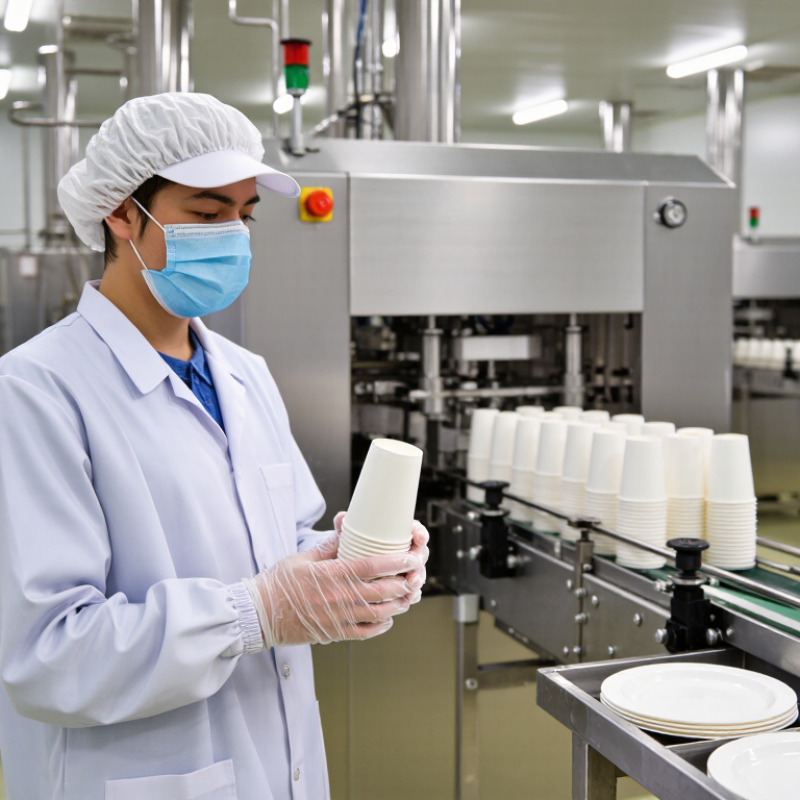
Hygiene in disposable paperware production means reducing contamination risks at every stage, from incoming paper rolls to sealed cartons. It does not mean every product is sterile. It means materials, equipment, and handling are controlled for their intended use. Paper should be stored off the floor, protected from moisture, dust, and pests. Keep it covered.
During converting, cutting blades, forming tools, and work surfaces need routine cleaning and inspection. Operators should wash their hands and use suitable protective clothing, especially when handling exposed product surfaces. Airflow and waste removal matter too: paper dust can settle where it is not wanted. A clean-looking line is not proof of good hygiene.
Finished cups, plates, and trays should be packed promptly in clean packaging and stored away from chemicals and damp areas. Production teams can use documented cleaning schedules, staff training, and checks for damaged packaging or visible residues. Records help trace a problem, but they do not prevent every one. That gap deserves attention. Hygiene improves when teams review near misses and adjust procedures, rather than treating a completed checklist as the whole job.
Paper cups, plates, and trays pass through several exposed steps after forming. Wet pulp, process water, rollers, cutting blades, and stacking areas can each introduce unwanted material. Risks include microbes from hands or damp surfaces, fibers and dust, lubricant leaks, and cleaning residues. Drying reduces moisture, but it does not protect a product from later contact.
Small gaps matter. Clean-looking is not sterile.
The vulnerable moments are often transitions: sheets moving between machines, blanks waiting in stacks, or finished items being packed. A maintenance tool, a glove touching a rim, or condensation above a conveyor can undo careful controls. It is easy to focus on the pulping stage and overlook converting and packing. That deserves a second look.
The CDC’s 2011 estimates attributed about 48 million foodborne illnesses in the United States to foodborne agents each year; this broad estimate does not identify paperware as a cause, but it shows why every food-contact point merits attention.
Practical controls include protected storage, dry and clean contact surfaces, monitored water quality, equipment checks, and handwashing at task changes. Records help, yet a checklist cannot spot every dusty ledge or rushed handoff.
Regular floor-level inspections can catch what paperwork misses.
Clean inputs and equipment help prevent avoidable contamination in disposable paperware. Paper rolls should arrive sealed, dry, and traceable. A torn wrapper or damp edge deserves attention, not a shrug. On the production line, dust, ink residue, lubricants, and hand contact can reach product-contact areas. Small details matter. A poorly stored stack may collect splash or debris before converting begins.
Sanitation works best as a routine, not a last-minute wipe. Operators can separate clean and used tools, review cleaning records, and inspect rollers, forming dies, and conveyor joints where fibers or residue may hide. Clean gloves help only when changed at the right moments. They are not magic. The World Health Organization’s 2015 foodborne-disease estimates report 600 million illnesses and 420,000 deaths globally each year. These figures cover foodborne disease broadly, not incidents linked specifically to paperware. They still underline why potential transfer points deserve care. A checklist can miss a hidden seam; regular verification helps catch what a quick glance does not.
Workers and production areas both shape the cleanliness of disposable paperware. Staff typically wash and dry their hands before entering controlled work zones, then wear clean garments, hair coverings, and other protective equipment suited to their tasks. Gloves can help, but they do not replace handwashing. A torn glove or a sleeve brushing a work surface can undo careful handling. Small details matter.
Production spaces need equally consistent attention. Teams clean and inspect equipment on a defined schedule, paying close attention to rollers, cutting surfaces, and packing stations where dust or scraps may collect. Materials should stay covered during storage and move through the facility along clear routes. Separate areas for incoming supplies and finished products can reduce unnecessary contact. Air filters, waste bins, and cleaning tools also need regular checks, not just a glance when visitors arrive.
Good routines depend on people noticing problems and reporting them promptly. A damp patch near a machine, for example, may signal a leak or a cleaning issue. Records of inspections and cleaning help teams spot missed steps, though paperwork alone cannot prove a surface is clean. No process is perfect. Staff may need to review routines when shifts change, equipment is repaired, or recurring issues appear. That reflection keeps sanitation practical, visible, and part of everyday work.
In disposable paperware production, hygiene is monitored at several points, not judged by appearance alone. Operators check handwashing, protective clothing, equipment condition, and work surfaces before production begins. During shifts, supervisors record cleaning times and inspect contact areas such as forming tools and packing tables. Looks clean. Not enough. Scheduled surface swabs can help confirm whether cleaning is effective. Air or water checks may also matter, depending on the process. Results need dates, locations, and responsible staff, so patterns can be traced rather than guessed.
Verification turns checks into evidence. Teams review logs, sampling results, instrument calibration, and corrective-action records. An out-of-range swab calls for a defined response. Depending on risk, affected product may be held while teams investigate, reclean, and record follow-up results. Audits can reveal repeated misses, but paperwork alone cannot prove good practice. People sometimes tick boxes too quickly. That weakness deserves attention: observation on the production floor must support the records.
Tips: Keep monitoring points fixed and clearly labeled. Use a schedule that names the checker and frequency. Review trends, not just individual pass results. Recheck after maintenance, line changes, or cleaning failures. Small records matter.
Risks can arise during forming, cutting, stacking, and packing. Damp surfaces, dust, lubricant leaks, or hand contact may affect exposed products. Small gaps matter.
No. Drying reduces moisture, but later contact can still introduce unwanted material. Clean-looking is not sterile.
Check rollers, cutting blades, conveyor joints, and packing stations. Fibers and residue can hide in seams. A quick glance may miss them.
Keep rolls sealed, dry, and traceable. A torn wrapper or damp edge needs attention before production continues.
No. Workers should wash and dry their hands before entering controlled areas. Change gloves when tasks or contact points change. Gloves are not magic.
Keep materials covered and away from splashes or debris. Separate incoming supplies from finished products, and use clear routes through the facility.
Report it promptly. It may point to a leak or cleaning issue near equipment. We may still miss one, so follow-up matters.
No. Records help teams notice missed steps, but they cannot reveal every dusty ledge. Regular floor-level checks are worth the extra look.
Hygiene is essential in disposable paperware production because these products may come into contact with food, drinks, or hands. Maintaining sanitary conditions helps prevent dust, microbes, chemical residues, and other unwanted contaminants from reaching the finished items. Risks can arise at several points, including the receipt and storage of raw materials, equipment operation, product handling, and packaging.
How to ensure hygienic production of disposable paper ware begins with using clean, properly stored materials and regularly cleaning and maintaining machinery. Workers can reduce contamination risks by following good personal hygiene practices, wearing suitable protective clothing, and keeping production areas orderly. Clear procedures for cleaning, handling, and storage help maintain consistent conditions throughout the process. Hygiene controls should also be monitored and verified through routine inspections, documented checks, and appropriate testing. Together, these measures support a cleaner production environment and help ensure that finished paperware is suitable for its intended use.

Jinli Machinery