Why is ultrasonic sealing used in paper cup machines? The answer begins with controlled heat, speed, and material protection. Unlike conventional hot-air or heated-plate sealing, ultrasonic technology creates localized vibrations between the paperboard and polyethylene coating. This energy softens the coating at the seam without heating the entire cup wall. The result is a narrow, clean bond that supports fast production.
Ultrasonic sealing specialist Dr. Erwin K. Schubert has said, “A stable process is more valuable than a fast process.” This principle fits paper cup manufacturing closely. A reliable seal must survive liquid pressure, stacking, transport, and brief contact with hot drinks. Operators watch the horn, anvil, pressure, and welding time. Small changes matter. A dusty surface can weaken the seam. Misalignment can create a visible crease or a hidden leak.
The technology also reduces the need for adhesives and may lower energy use during continuous production. It can seal curved side seams and bottom joints with limited thermal distortion. That helps cups keep their round shape. Still, ultrasonic sealing is not a universal solution. Paper thickness, coating type, moisture, and machine calibration influence every result. Some lines need repeated testing before reaching stable output. That part is easy to underestimate.
This guide examines seven practical reasons manufacturers choose ultrasonic sealing in paper cup machines. It also considers limitations, maintenance details, and quality checks. The goal is not to praise the technology blindly. It is to explain where ultrasonic sealing performs well, and where careful process control remains essential.
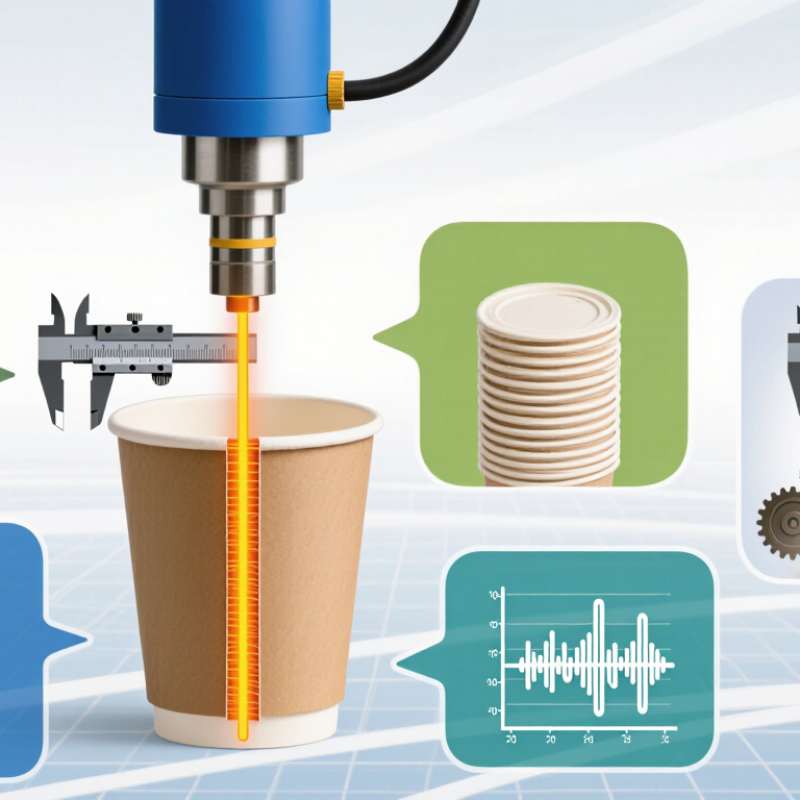
Ultrasonic sealing joins coated paper layers through high-frequency mechanical vibration. A sonotrode presses the cup sidewall against an anvil. Friction creates localized heat inside the coating, not across the entire paper body. The softened thermoplastic layer bonds under controlled pressure. This process can support fast production and cleaner working areas because it usually needs no liquid adhesive.
Tip 1: Check the coating first. PE and PLA coatings may require different energy settings.
Tip 2: Keep the sealing tools aligned. Small alignment errors can create leaks or weak seams.
Tip 3: Control pressure carefully. Excess pressure may mark the paper or reduce cup shape accuracy.
Tip 4: Inspect the seam after every major adjustment. A smooth edge is helpful, but it does not prove full tightness.
Ultrasonic sealing also reduces waiting time between forming and handling. The bonded area cools quickly after vibration stops. Operators should still test samples with water, pressure, and visual inspection.
Tip 5: Monitor vibration amplitude and sealing time together. More energy is not always better.
Tip 6: Clean the horn and anvil regularly. Dried coating can disturb energy transfer.
Tip 7: Record production settings for each paper structure. In practice, one setting rarely suits every material.
We have seen stable results improve after small adjustments, although the process still needs honest testing. A perfect seam is not guaranteed by advanced equipment alone.
Ultrasonic sealing joins paper cup sidewalls by converting electrical energy into controlled mechanical vibration. A horn presses against the overlapped sidewall seam. Rapid vibration creates localized heat within the thermoplastic coating. The coating softens and bonds without open flames, hot plates, or added adhesive. The result is a narrow, clean seam that supports liquid resistance and stable cup forming.
Tip 1: Control pressure carefully. Excessive pressure can crush the paper edge or create an uneven seal. Too little pressure may leave small channels for leakage.
Tip 2: Match vibration time with material thickness. Thin coated paper often needs less energy than heavier stock. Operators should inspect seam width, surface marks, and bond strength during production, not only afterward.
In practical machine work, alignment is equally important. The horn and anvil must meet evenly along the tapered sidewall. A slight offset can produce wrinkles near the rim or base. A setting that worked yesterday may fail after material changes, humidity shifts, or tool wear. That is easy to underestimate. Regular checks help identify weak bonding before rejected cups accumulate.
Tip 3: Test finished seams with controlled leak checks and peel inspections. Visual appearance alone is not reliable. Some weak seams look perfect until the cup holds warm liquid.
Ultrasonic sealing is used in paper cup machines because it joins materials through high-frequency vibration, not open flame or liquid adhesive. The horn presses the sidewall seam while friction creates localized heat. This process suits fast production lines and clean factory environments. Smithers reports that global paper packaging demand continues to expand, increasing pressure for efficient, consistent converting equipment. The data supports ultrasonic investment, but machine settings still require careful validation.
Tip 1: Improve seam consistency. Controlled vibration can create uniform bonds around the cup wall.
Tip 2: Reduce adhesive dependence. This may simplify material handling and reduce wet curing time.
Tip 3: Support higher line speeds. PMMI packaging automation reports identify speed and uptime as major equipment priorities.
Tip 4: Keep the work area cleaner. There are fewer glue drips, blocked nozzles, and sticky rollers.
Small detail, big effect.
Tip 5: Protect cup appearance. A narrow seam can preserve the printed surface and rim geometry.
Tip 6: Save energy during production. The heat is concentrated at the joining point, rather than across the whole machine.
Tip 7: Improve process repeatability. Digital controls can monitor pressure, amplitude, and sealing time.
Still, ultrasonic sealing is not automatically perfect. Poor paper coating, dust, or incorrect horn alignment can weaken the joint. I would test every paper structure under real production conditions. Industry reports from Smithers and PMMI provide useful direction, but factory trials reveal the practical limits.
Tip 1: Choose paper cups with a thermoplastic coating. Ultrasonic energy softens polymer layers, not ordinary dry paper fibers. Polyethylene and biodegradable polymer coatings can form reliable seams when their thickness is consistent.
Tip 2: Check the coating before production. Some paperboards have uneven surfaces or weak adhesion. I have seen attractive sheets fail because the coating separated during sealing. Tip 3: Use clean, dry materials. Dust, moisture, and loose fibers can interrupt energy transfer. Small contamination matters.
Tip 4: Select simple cup designs with overlapping side seams. A flat, stable joint gives the horn better contact. Tip 5: Avoid excessive layers at the rim. Thick folds may require higher pressure and longer sealing time. That can distort the cup edge. Tip 6: Keep the sealing area uniform. Sudden changes in thickness often create incomplete bonding or visible marks.
Tip 7: Test the exact material and design together. A coating that seals well on a sidewall may behave differently near the bottom fold. Operators should inspect cut sections, leak resistance, and seam appearance during trials. Do not trust appearance alone. Ultrasonic sealing can reduce added adhesive and support clean, fast production, but it is not ideal for every paper structure. Some designs still need thermal sealing or another joining method. Small trials reveal more than assumptions.
Ultrasonic sealing is widely used in paper cup machines because it joins coated paper without open flames, adhesives, or long heating cycles. However, choosing equipment requires more than checking its advertised output speed. The sealing system must match the cup material, coating, wall thickness, and production rate.
Begin with a controlled production trial. Run the actual paper stock through the machine, not a similar sample. Inspect the seam for gaps, wrinkles, scorching, and weak bonding after cooling. Measure line speed, energy use, rejected cups, and pressure stability. A strong seal should remain consistent when the machine operates near its planned capacity. Short tests can mislead.
Check the ultrasonic generator, horn design, amplitude range, and pressure control. The horn should contact the seam evenly, especially around curved cup walls. Ask whether operators can adjust sealing time and pressure without complicated procedures. Clear settings reduce mistakes during shift changes. Maintenance access also matters. Dust from paper fibers can collect around moving parts and affect alignment.
I have seen efficient trials fail after several hours because heat and vibration changed the sealing conditions. Do not ignore that risk. Test continuous operation, startup cycles, material changes, and emergency stops. Record the results with dated samples. A practical evaluation also includes spare-part availability, operator training, guarding, noise levels, and technical support. The cheapest system may create expensive inconsistency. A slower machine may prove more reliable for your actual production needs.
It joins coated paper layers using high-frequency mechanical vibration. A horn presses the sidewall against a supporting surface. Friction softens the coating and forms the seam.
Usually, it does not. The coating itself becomes the bonding layer. This can reduce glue drips, blocked nozzles, and wet curing time.
Common thermoplastic coatings include PE and PLA. Each coating may need different vibration, pressure, and timing settings. One setting rarely fits every paper structure.
Keep the horn and supporting surface aligned. Control pressure carefully. Test samples with water and pressure after major adjustments. A smooth seam alone proves little.
It can support fast lines and quick handling after forming. The sealed area cools soon after vibration stops. Work areas may also stay cleaner.
A narrow seam can preserve printed surfaces and rim geometry. Excess pressure may leave marks or distort the cup shape. Appearance still needs inspection.
Monitor vibration amplitude and sealing time together. More energy is not always better. Excess energy may damage the paper or weaken the result.
Clean the horn and supporting surface regularly. Dried coating can interrupt energy transfer. Small particles may create weak spots. Clean tools matter.
No. Dust, poor coating, misalignment, or incorrect pressure can weaken the joint. Advanced equipment cannot replace real production trials. We should admit that.
Ultrasonic sealing is an efficient method for joining paper cup sidewalls without relying on traditional heat, adhesives, or complex bonding processes. In paper cup manufacturing, high-frequency vibration creates controlled friction between suitable coated paper layers, generating localized heat that forms a secure and consistent seal. This process can improve production speed, reduce material waste, and support cleaner operation while maintaining the cup’s shape and structural strength. Understanding why is ultrasonic sealing used in paper cup machines helps manufacturers select a joining method that balances quality, efficiency, and operating stability.
The main benefits include fast sealing cycles, precise energy use, reliable seam formation, reduced dependence on consumable adhesives, and easier integration with automated equipment. However, performance depends on the paper’s coating, thickness, moisture resistance, and overall cup design. When evaluating ultrasonic sealing equipment, manufacturers should consider output requirements, sealing accuracy, energy consumption, maintenance access, compatibility with existing machines, and quality-control features. A carefully matched system can provide dependable results for a wide range of paper cup production applications.

Jinli Machinery