Jinli Machinery
1. Global Market Paradigm: The Sustainable Transition to Paper Containers
The shift in global consumer packaging from single-use plastics to biodegradable and recyclable paper products has passed its inflection point. Triggered by strict legislative actions worldwide—such as the European Union’s Single-Use Plastics Directive (EU) 2019/904, the United States' state-level bans on polystyrene food service ware, and China's comprehensive plastic pollution control initiatives—global quick-service restaurants (QSRs), retail brands, and food production plants are rapidly upgrading their packaging supply chains.
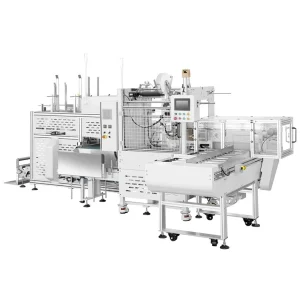
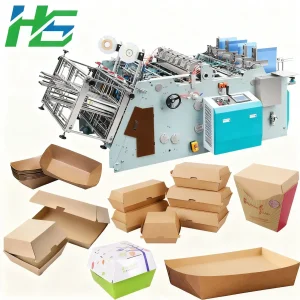
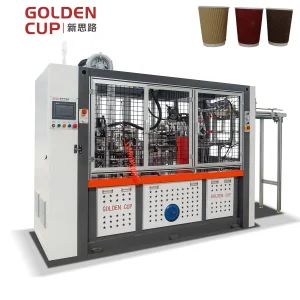
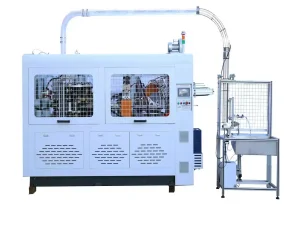
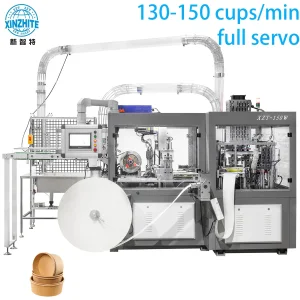
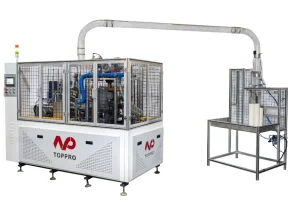
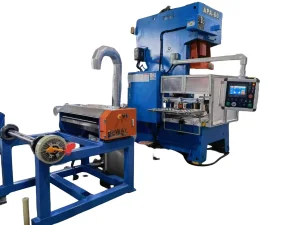
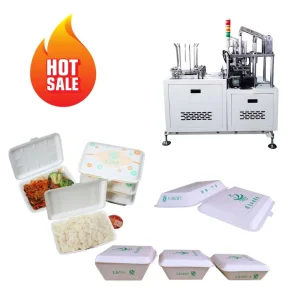
In this context, industrial-grade forming systems, including high-speed paper cup machines, automatic paper straw machinery, and versatile tray-forming mechanisms, have transitioned from commodity capital equipment to core strategic assets. The key requirement for modern plants is no longer just throughput, but mechanical stability, raw material adaptability (especially with the rise of plastic-free aqueous barrier coatings and PLA layers), and minimal downtime.
Information Gain Principle: Unlike traditional packing machines, modern automatic container machinery must operate under higher thermal pressures and distinct friction parameters associated with eco-friendly barrier materials. Systems utilizing Open Cam configurations eliminate the structural backlash of chain-driven models, establishing a new global benchmark for precision.
50+
Skilled Mechanical Engineers
2,000㎡
State-Of-The-Art Factory Area
10M RMB
Average Annual Output Value
15+
Export Countries & Regions
2. Zhejiang Jinli Machinery Co., Ltd.: Professional Engineering & Leadership
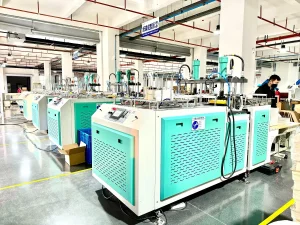
Located in Feiyun New District, Ruian City, Zhejiang Province, Zhejiang Jinli Machinery Co., Ltd. is a leading enterprise combining scientific research, structural design, precision manufacturing, and global export service. Specializing in the development of premium paper container forming machinery, the company maintains a dedicated team of over 50 professionals.
By focusing heavily on structural rigidity, CAM transmission mechanics, and automation protocols, Zhejiang Jinli Machinery delivers machinery with an average annual output value exceeding 10 million RMB. Our highly acclaimed product catalog—spanning advanced Paper Cup Machines, Fully Automatic Paper Bowl Machines, and specialty Cup Cake Forming Machines—is engineered to meet international safety and performance standards.
Our global footprint includes distribution networks and custom customer deployments in Germany, Egypt, the Philippines, Australia, New Zealand, Turkey, India, South Korea, Jordan, Oman, and several other countries.
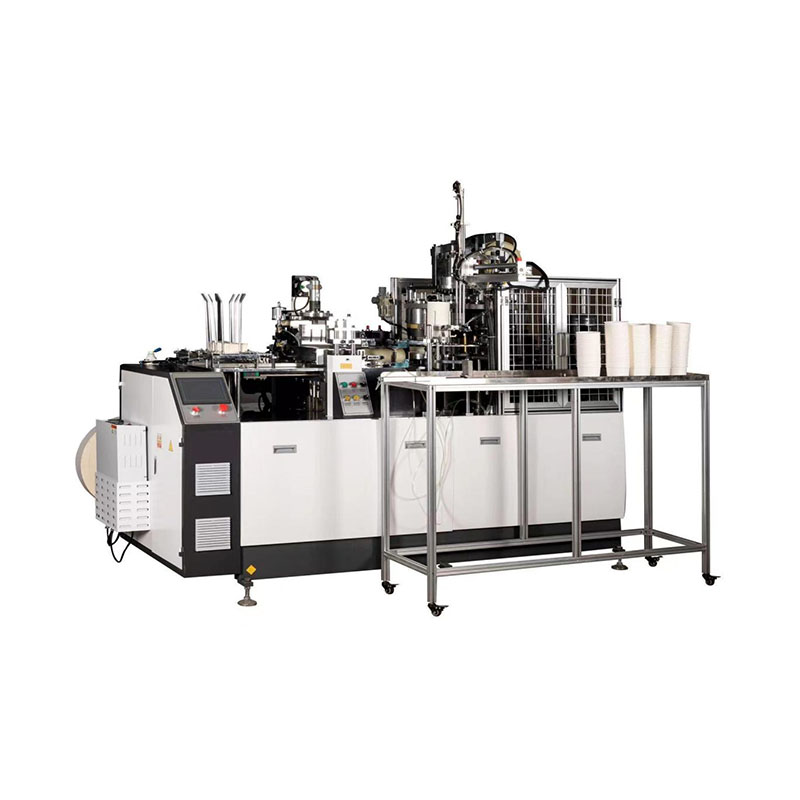
3. Mechanical Architecture: Open Cam System vs. Traditional Chain Drive
For industrial machinery buyers, understanding the internal mechanical transmission mechanism is key to calculating long-term ROI. Traditional paper cup and paper container machinery often relies on heavy-duty chains. While cost-effective, chain transmission systems suffer from mechanical stretch, backlash, and high lubrication requirements over long production cycles.
Precision Open Cam
Replaces linear pull chains with index drives. This architecture distributes mechanical stress evenly, minimizing positional offset during rapid blank feeding and sealing cycles.
Automated Sensor Arrays
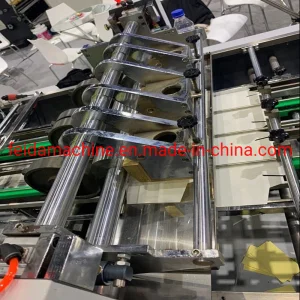
Monitors cup bottom punching, wall-sealing, and ejection sequences in real time. Automatically stops the machine in case of material errors, preventing raw stock waste.
Energy Efficient Thermals
Our integrated hot-air and ultrasonic sealing modules are designed to weld PLA and PE-coated paperboard using less thermal energy, preserving coating integrity.
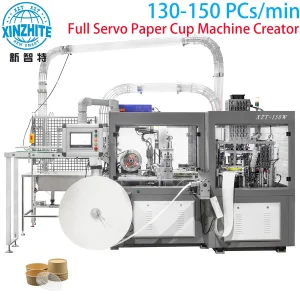
Our Open Cam Paper Bowl Machine and high-speed cup-making systems use dual-axle or multi-axle index drives. These internal parts are hardened and ground for wear resistance, requiring less oil and maintenance. By switching from manual grease application to centralized automated oil mist lubrication systems, we extend the machinery service life while ensuring food-safe manufacturing conditions.
4. Material Compatibility: PLA, Aqueous Coatings, and Recycled Paperboard
Modern brand owners want their paper container suppliers to handle different raw materials. The mechanical challenges of forming biodegradable containers include:
- Surface Friction Differences: Traditional PE coatings provide natural lubrication during the cup-sliding phase. Modern PLA and water-based dispersion barrier coatings exhibit higher surface friction, which can cause sticking or tearing in standard machines.
- Specific Sealing Temperatures: PE-coated paperboard has a wide heat-sealing range. PLA and compostable plastic-free papers require precise temperature control to avoid overheating or incomplete welds.
- Spring-Back Challenges: Recycled or thicker paperboard has higher mechanical memory, requiring precise, multi-stage bottom knurling and rim-curling mechanisms to prevent leaking.
| Material Type | Common Thickness (GSM) | Optimal Sealing Method | Operational Characteristics & Benefits |
|---|---|---|---|
| Single/Double PE Coated Paper | 150 - 380 GSM | Hot Air / Heater Blocks | Industry standard; easy to form; highly cost-efficient for general food service applications. |
| PLA (Polylactic Acid) Liner | 170 - 350 GSM | Ultrasonic Sealing | Compostable; bio-based; requires precise temperature monitoring to prevent localized melting. |
| Water-based Dispersion (Aqueous) | 160 - 320 GSM | High-frequency Ultrasonic | Recyclable in standard paper streams; requires higher pressure on cam stroke for clean joints. |
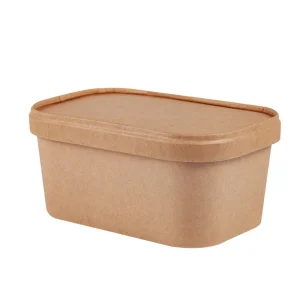
| Heavy-gauge Board (for Large Bowls) | 250 - 450 GSM | Dual-stage Hot Air + Mechanical Cam | Best for salad & square bowls; requires heavy knurling to prevent leakage along bottom folds. |
5. Global Logistics & Localization Scenarios
To maintain efficiency, QSRs and package manufacturers need machines tailored to local environments. Our engineering and delivery processes are optimized for these regional requirements:
Europe and North America (High Automation & Safety Focus)
Industrial buyers in these regions require compliance with strict CE machinery safety standards, UL electrical components, and sound levels below 80 dB. We supply machines equipped with full safety enclosures, Siemens PLC systems, and customized electrical cabinets that integrate seamlessly into smart factories.
Middle East and North Africa (Thermal Durability & High Speeds)
In hot climates, high ambient temperatures can affect electronic cabinets and pneumatic lines. We configure machines exported to Egypt, Oman, Jordan, and Turkey with cooling units for main control cabinets and heat-resistant air components. This ensures stable, continuous operation even at rates exceeding 150 cups per minute.
Southeast Asia and South Asia (Rapid Setup & Multi-size Versatility)
In markets like India and the Philippines, manufacturers often need to produce multiple cup sizes on a single machine. To support this, we design our machinery plates and forming molds with quick-change tooling. This allows operators to transition between different cup diameters in under four hours, reducing downtime.
6. Technological Roadmap: Smart Factories and the Future of Paper Packaging
As manufacturing industries adopt Industry 4.0 principles, Zhejiang Jinli Machinery is integrating smart, connected technologies into our paper cup and container machinery. Our development pipeline focuses on three main technological pillars:
IoT Diagnostic Telemetry: Future versions of our high-speed paper forming machines will feature Ethernet modules. This allows plant managers to monitor real-time output rates, thermal sealing profiles, and system errors from remote dashboards.
Adaptive Servo-Driven Feeding: We are transitioning critical mechanical functions from mechanical cams to dedicated servo motors. By using electronic control for paper feed and bottom punch actions, changeover times are reduced, and the machine can adjust automatically to different paper weights (GSM).
Integrated Automated Quality Vision Control: Standard optical sensors can only detect feed jams. We are testing inline vision inspection systems that scan the rims and bottoms of finished cups or bowls as they travel along delivery lines, automatically rejecting items with visual defects or sealing gaps.