Explore our elite engineering portfolio featuring high-speed forming, automated flexographic printing, and advanced thermal knurling systems.
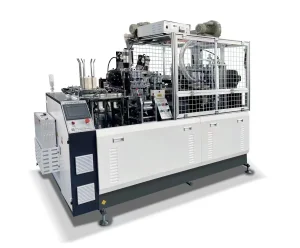
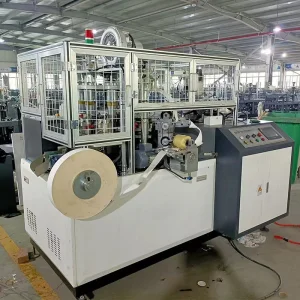
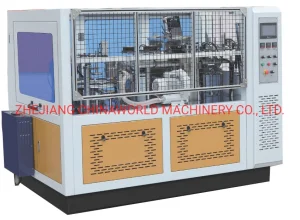
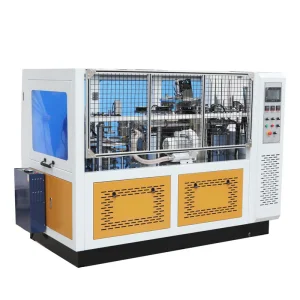
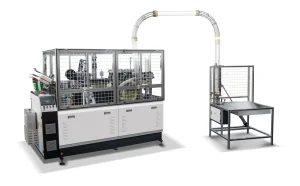
In the high-speed manufacturing of disposable food service containers, the bottom knurling stage represents the most critical phase for guaranteeing product reliability. The paper cup knurling machine integrates heat, structural mechanical pressure, and precision tooling profiles to seal the bottom disk to the conical cup body. Without proper knurling, even the highest quality cup stock will suffer catastrophic structural failure or seal leakage under the thermal and hydrostatic pressure of hot coffee, teas, or liquid foods.
The science of knurling involves a precise balance of variables: heat activation temperature, dwell time, and mechanical sealing force. Depending on the coating polymer applied to the paper board (typically Single/Double PE, biodegradable PLA, or water-based barrier coatings), the parameters of the knurling head must adapt instantly. Industrial knurling mechanisms utilize pattern-engraved steel rollers configured with specialized grooves to press the overlapping paper layers together, ensuring the activated thermoplastic flow interlocks with the cellulose fibers of the adjacent layer.
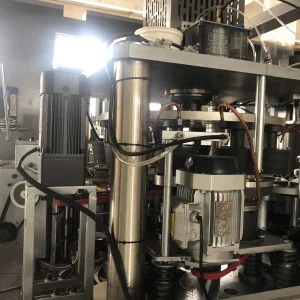
Features independent temperature zone controls utilizing advanced heating elements or localized hot-air blowers to ensure precise PE/PLA coating activation without scorching the underlying paper substrate.
Engineered with micro-machined, high-strength tool steels that provide consistent indentation depth, optimizing mechanical lock strength and maximizing leak protection across different paper weights.
Designed with rigid indexing units and heavy-duty cams to maintain continuous production speed alignment, avoiding misalignment, bottom slippage, or structural tearing during rapid output cycles.
A premier global manufacturing center dedicated to excellence in paper container forming technologies.
Zhejiang Jinli Machinery Co., Ltd is strategically located in the Feiyun New District, Ruian City, Zhejiang Province—the hub of China's advanced packaging machinery sector. Spanning a modern production facility of approximately 2,000 square meters and employing a highly skilled workforce of over 50 technical specialists, Jinli operates as a comprehensive enterprise integrating scientific research, product design, custom manufacturing, international sales, and lifelong after-sales support.
Specializing in complete sets of equipment for eco-friendly paper packaging, we focus our technological capabilities on paper cup machines, paper bowl machines, and automated peripheral systems. With robust technical capacity and sophisticated CNC processing equipment, we achieve an average annual industrial output value of about 10 million RMB.
Our solutions are recognized nationwide and exported directly to global markets including Germany, Egypt, the Philippines, Australia, New Zealand, Turkey, India, South Korea, Jordan, Oman, and beyond. We are the trusted partner for brands demanding high yield, minimal waste, and outstanding mechanical durability.

The global single-use packaging sector is undergoing a profound paradigm shift. Legislative actions such as the European Union’s Single-Use Plastics Directive (SUPD), coupled with similar initiatives across North America and Asia-Pacific, have accelerated the phase-out of traditional plastic cups. As a result, the global demand for paper-based cups and containers has grown exponentially.
This environmental transition presents unique mechanical challenges. Paper container manufacturers must switch from standard low-density polyethylene (LDPE) coatings to eco-friendly alternatives. These include polylactic acid (PLA) coatings derived from corn starch, and water-based (aqueous) barrier dispersions. PLA and aqueous coatings exhibit narrow sealing windows, meaning they are far less forgiving of temperature and pressure variations than conventional plastic coatings. Machinery must adapt to prevent bottom leakage and rim tearing.
To overcome these challenges, Jinli Machinery has optimized the knurling unit kinematics. We achieve this by integrating high-frequency ultrasonic heaters at the bottom-forming station. This technology allows for the molecular bonding of PLA and water-based barrier coatings without overheating the paper fiber. This advancement ensures that manufacturers can transition their raw materials smoothly without reducing production line speed or sacrificing bottom seal integrity.
By providing localized thermal management, our machinery ensures that the knurling wheel creates deep, consistent indentations. These indentations seal the cup bottom effectively, ensuring it remains robust even when filled with high-temperature liquids.
Packaging requirements are highly regional, influenced by local beverage cultures, food types, and supply chain dynamics. Here is how our machinery meets these localized needs:
As the manufacturing industry transitions toward Industry 4.0, packaging machinery is evolving from pure mechanical synchronization to digital control and self-diagnostics. At Jinli Machinery, our research and development pathway focuses on three primary innovations:
1. Servo-Driven Knurling Mechanics: Replacing traditional mechanical gear link drives with independent multi-axis servo motors. This allows the system to adjust knurling force and dwell time on-the-fly, accommodating fluctuations in paper roll thickness and humidity without stopping the machine.
2. Optical Quality Inspection Integration: Integrating high-resolution camera sensors directly after the bottom knurling and rim curling stations. These sensors utilize AI machine vision models to inspect and reject containers with seal defects in real time, guaranteeing zero-defect delivery to packing boxes.
3. Advanced Thermal Management: Developing energy-efficient heaters that consume up to 30% less power by concentrating heat energy precisely on the sealing track. This minimizes radiant heat loss and reduces thermal stress on surrounding machinery components.
Operating in highly regulated markets such as the European Union and Australia requires strict adherence to international mechanical and safety standards. Our manufacturing factory implements a comprehensive quality control protocol throughout every production phase:
Engineered for continuous heavy-duty operation, featuring high efficiency and low maintenance costs.
Technical insights from our engineering department to help optimize your paper cup forming processes.
 Jinli Machinery